Tuesday, June 24, 2025

Navigating BEPS and Global Tax Reforms: Implications for India’s Financial Market

Introduction

Base Erosion and Profit Shifting (BEPS) and other international tax issues have a significant impact on India's financial market. The problems primarily arise due to profit-shifting arrangements by multinational corporations (MNCs), tax havens, and aggressive tax competition among nations. Being a developing country, India is facing a colossal revenue loss due to tax avoidance strategies followed by business groups and high-net-worth individuals. This essay presents the implications of BEPS and other international tax issues on India's financial market and suggests regulatory controls to meet such challenges.

Understanding the Issue

Global tax governance has been influenced by institutions like the Organisation for Economic Co-operation and Development (OECD) and its BEPS strategy mainly. The BEPS initiative is geared towards curbing tax avoidance by multinational enterprises using strategies like country-by-country reporting, the Common Reporting Standard (CRS), and the imposition of Pillar One and Pillar Two reforms. The strategies have been criticized as being developed-bias, with developing economies like India left behind.

India is losing substantial tax revenues as a result of profit shifting and tax competition. Reports state that corporate tax collections lost by India as a result of BEPS in 2021 totalled about 2% of total corporate tax collections. The absence of a strong global tax framework makes it easy for MNCs to take advantage of loopholes, diverting profits to low-tax destinations and eroding India's tax base.

Figure 1:Trends in  Corporate tax revenue lost as a share of corporate tax revenue collected (in %) and the amount of tax revenue lost in India due to profit shifting.
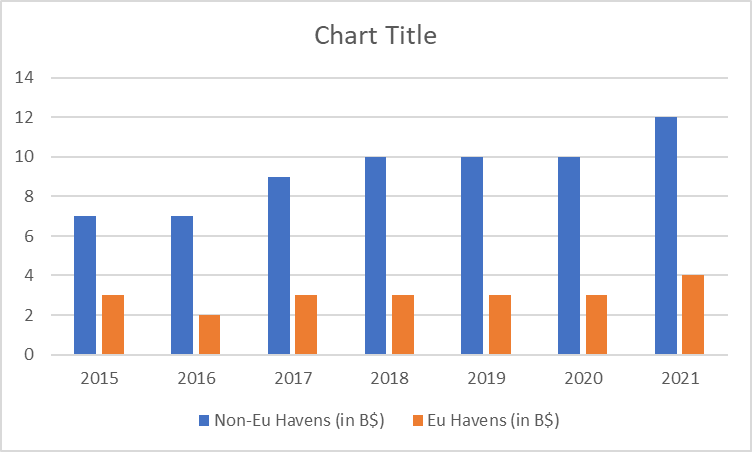
Note: Graphs show the trends in Corporate tax revenue lost as a share of corporate tax revenue collected (in %) and the amount of tax revenue lost in India due to profit shifting. Source: The Atlas of the Offshore World, n.d.-b


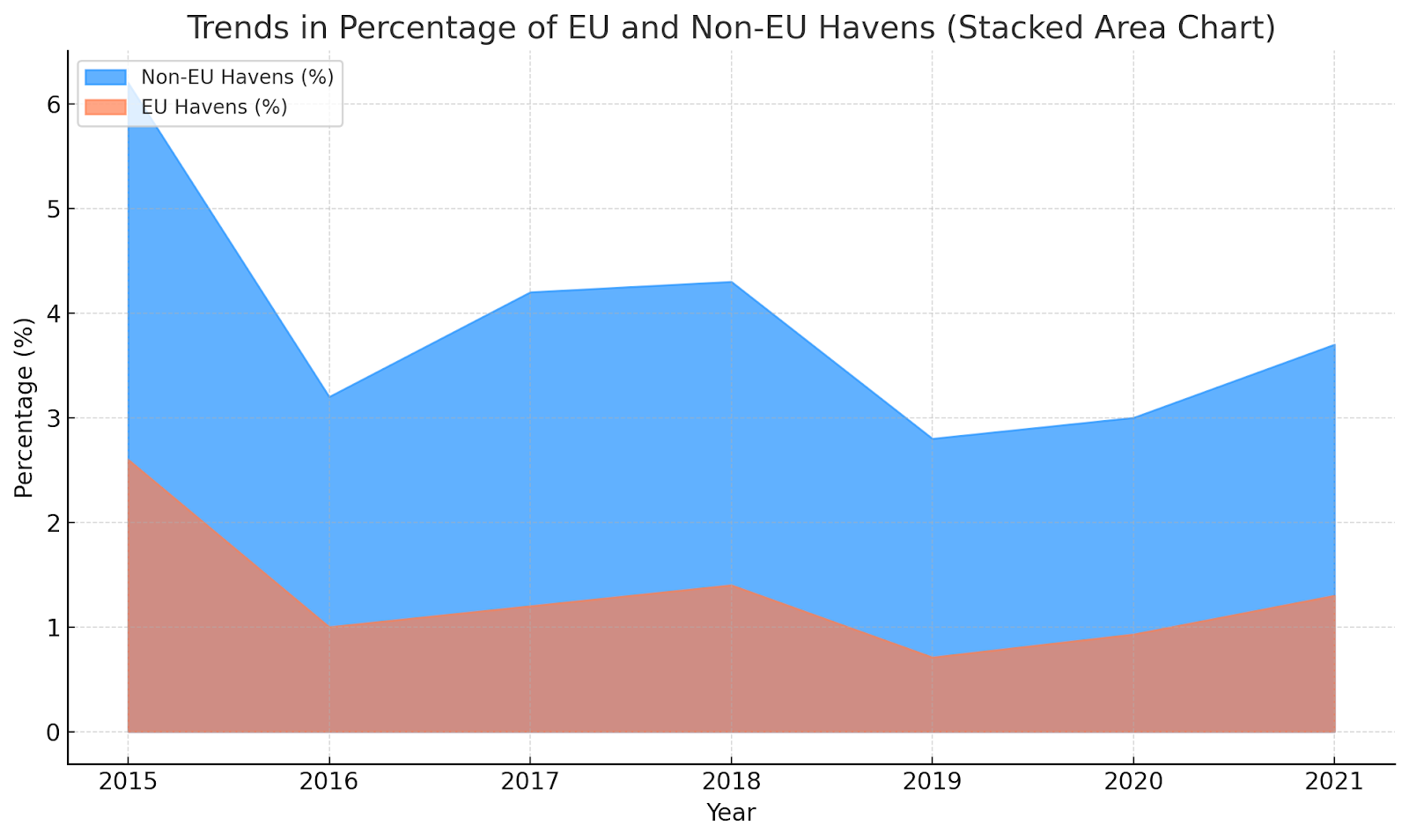
Figure 2: Trends in the cumulative amount of offshore financial wealth (equities, bonds, mutual fund shares, and associated bank deposits) held abroad by Indian households
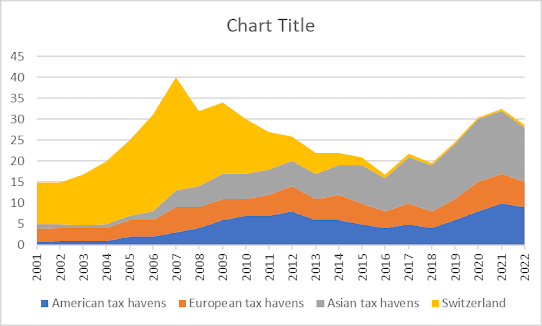


Note: The figure shows the cumulative amount of offshore financial wealth (equities, bonds, mutual fund shares, and associated bank deposits) held abroad by Indian households. The above graph breaks down this wealth by the location of the tax haven it is held in. ( in Billion $ terms). Source: The Atlas of the Offshore World, n.d.-b


Effects on the Financial Market of India

  1. Erosion of Public Revenue: Redistribution of profits to tax havens deprives governments of corporate tax revenues, which decreases the government's revenue. Decreased revenue constrains public investment in infrastructure, healthcare, and education, hence undermining economic growth and financial stability.

  2. Foreign Direct Investment (FDI) Volatility: Though tax incentives are utilized for the attraction of foreign investment, harsh tax competition could lead to an unstable business atmosphere. India's reductions in its corporate tax rate to remain competitive have led to short-term peaks in investment but cannot guarantee economic sustainability in the long term.

  3. Stock Market and Investor Confidence: The stock market responds negatively to uncertainty caused by taxes. Offshore tax leaks such as the Panama Papers and Pandora Papers have exposed the magnitude of tax evasion by Indian parties, which has eroded investor confidence. Transparency and poor regulation reduce confidence in Indian financial institutions.


  1. Offshore Real Estate Investment Grows: BEPS also affects capital investment as rich people and companies invest money in offshore real estate hubs such as Dubai, bypassing local investment options. This undermines the Indian banking sector by lowering local savings and capital for lending.


Figure 3: Offshore Real Estate Wealth in 6 Global Cities and Regions by Indians
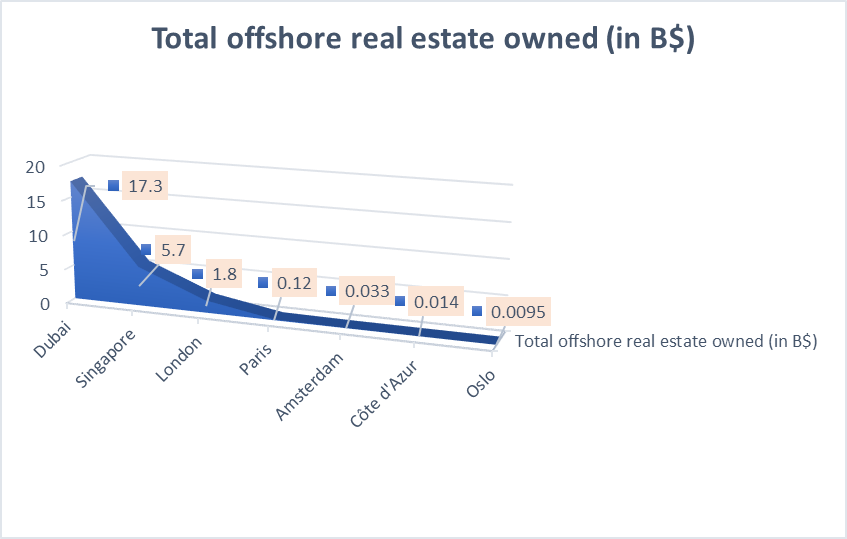

Note: Graph shows Offshore real estate wealth in 6 global cities and regions by Indians. Total Offshore real estate wealth is 24.93 bn USD and it is 0.87% of the Country’s GDP.  Source: The Atlas of the Offshore World, n.d.-b


Addressing BEPS and Tax Challenges

To tackle BEPS and related tax issues, India needs a multi-pronged regulatory approach, combining domestic reforms with active participation in global tax governance.

1. Enforcement of Domestic Tax Laws: India has gone on to tackle BEPS via, among others, the General Anti-Avoidance Rule (GAAR) and the reform of the Income Tax Act. There is still, however, a need to consolidate tax enforcement. 

Compulsory public country-by-country reporting: Requiring MNCs to disclose detailed financial information on their operations in all countries can hold them more accountable and transparent.

Strengthening Transfer Pricing Regulations: India will have to enhance its regulation on intra-group transactions to prevent profit shifting in the form of high royalty payments and management fees.

2. Enhancing International Cooperation: The current OECD-led framework has been criticized for favoring developed nations, necessitating a more inclusive approach.

Support for a UN-Led Global Tax Policy Framework: India has supported a UN-led global tax policy framework to help ensure equitable representation of developing nations in world tax policy development.

Strengthening Automatic Exchange of Information (AEOI) and Common Reporting Standard (CRS): Better tools to enforce more effective monitoring of undeclared offshore assets can discourage tax evasion.

3. Fighting Tax Havens and Offshore Wealth

India must implement tougher policies to discourage tax evasion through offshore deposits and property investment.

Extensive Offshore Asset Disclosure Mechanisms: The government should intensify surveillance of Indian investments in tax havens and impose a penalty for nondisclosure.

Prioritizing Beneficial Ownership Transparency: Mandatory disclosure of ultimate ownership arrangements in offshore accounts will stop illicit financial flows.

4. Execution of Digital Taxation Policies

With the digital economy growing rapidly, India must adapt its tax policies to ensure fair revenue collection from multinational digital enterprises.

Strengthening Equalization Levy: Expanding the base of the equalization levy on digital services will allow India to tax revenue from digital entities without a physical presence in India.

Implementing OECD's Pillar One with Modifications: Although OECD's Pillar One aims to redistribute taxing rights, India needs to negotiate terms more suitable for developing countries.

Conclusion

The BEPS and tax competition challenges undermine India's financial stability, lowering tax revenues, deterring domestic investment, and boosting offshore financial flows. OECD-led frameworks have progressed but not to the extent of addressing the concerns of developing countries. A UN-led tax governance model can provide a more balanced solution by providing equitable representation in global tax policymaking.

India should take a balanced approach to fortifying its domestic tax policy, encouraging openness, improving taxation in the digital era, and pursuing inclusive international cooperation. Adopting these methods will enable India to protect its financial market as well as earn sustainable economic progress while mitigating the negative implications of BEPS and global tax concerns.

Fintech - Unlocking a Himalayan Adventure: A Thrilling Opportunity for Financial Inclusion in India!

 Fintech, or financial technology, encompasses the use of technological advancements to deliver financial services. While technology integration in banking has been evolving for decades, the recent rapid adoption of cutting-edge technologies by a substantial segment of the population is remarkable and presents significant opportunities to enhance financial inclusion in India.

The impressive growth of the fintech sector can be attributed to several key factors. These include extensive last-mile mobile connectivity (which stands at 95% according to MoSPI), the establishment of identity through Aadhar enrollment (with a staggering 138 crore enrollments to date), and the promotion of financial inclusion initiatives such as the Jan Dhan Yojana, which has seen the opening of 51 crore accounts by 2023 aimed at serving the unbanked population.

On the technological front, scalable platforms like IMPS and UPI have emerged to facilitate smoother transactions, along with the availability of UPI, GSTIN, and Digi Locker services to both banking and fintech industries. Together, these elements have fueled the rapid advancement of fintech in India.


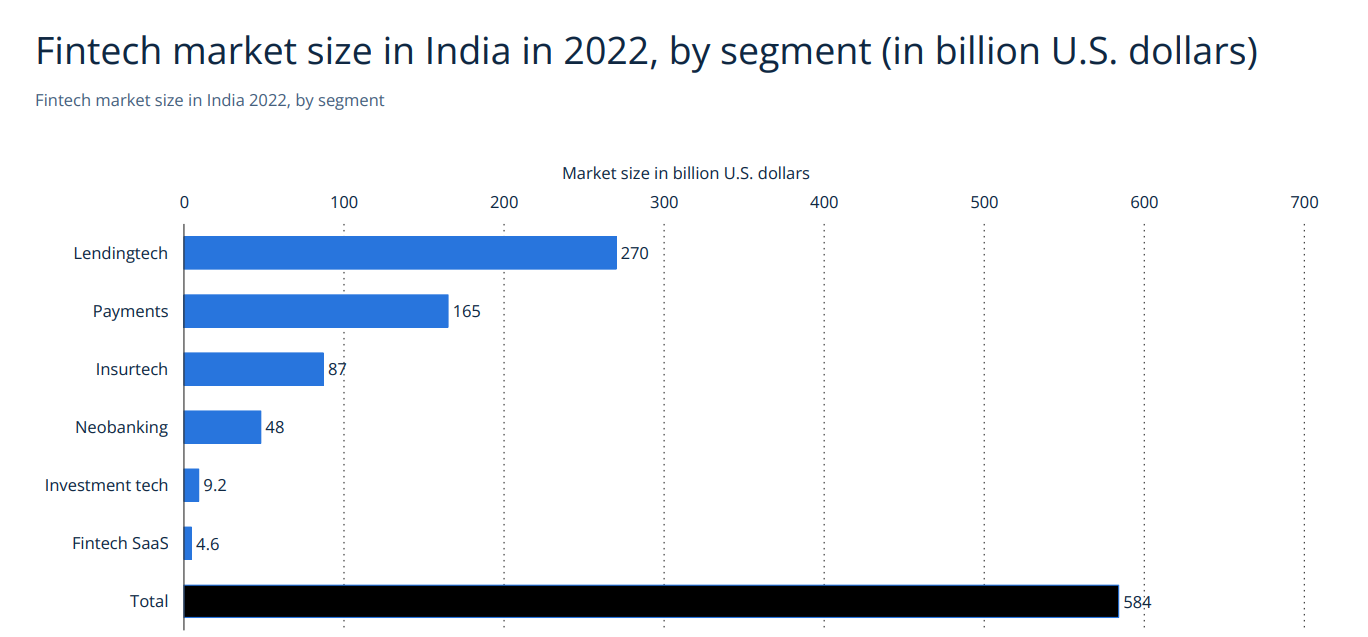
Figure: Fintech Market Size in 2022

Note: The above chart shows the sector-wise share of the Fintech market in India in 2022. 


Financial technology (fintech) has become a crucial player in promoting financial inclusion in India. By utilising innovative technologies, fintech companies are bridging gaps in the traditional banking system, making financial services more accessible, affordable, and tailored to the diverse needs of the population.

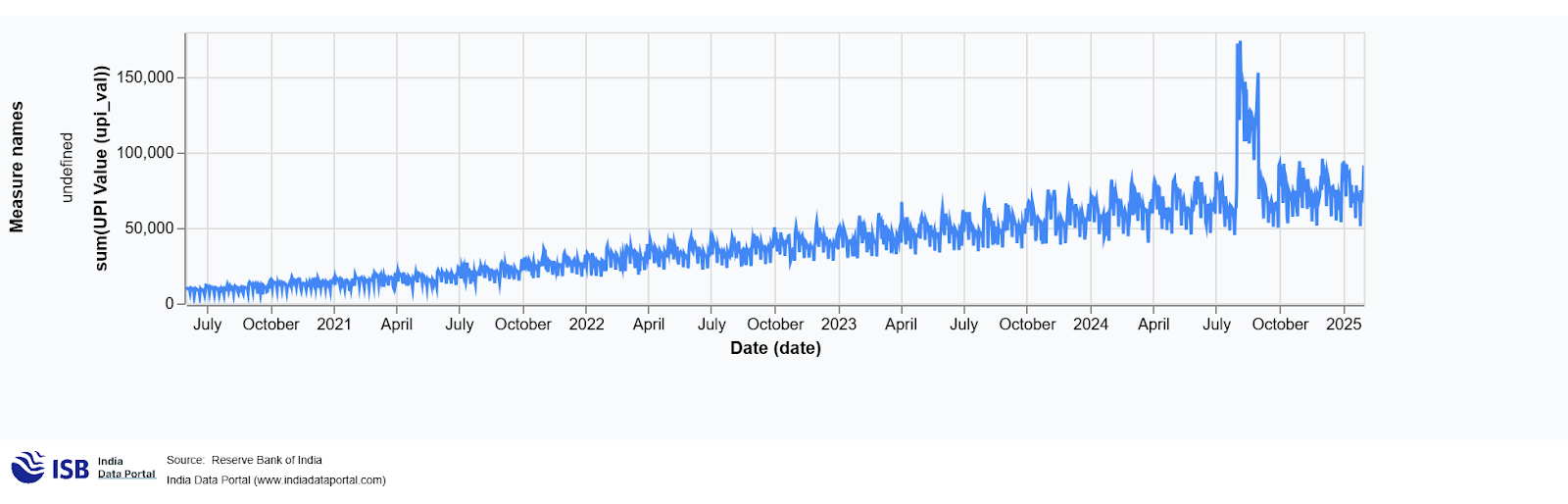
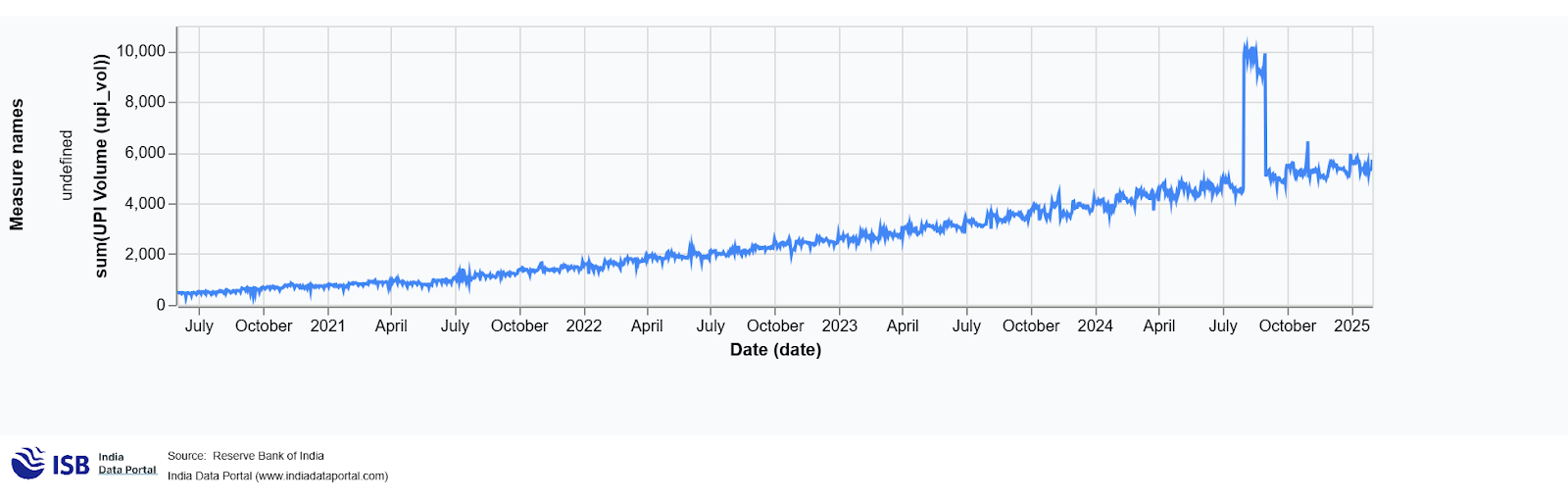
The rise of digital payment platforms has been vital in enhancing financial inclusion. The Unified Payments Interface (UPI), introduced by the National Payments Corporation of India, has transformed the payments landscape. As of January 2025, UPI accounted for 48.4% of all digital transactions in the country, boasting over 590 million registered users (Reuters, 2025). This widespread adoption indicates a shift toward a cashless economy, enabling even those in remote areas to engage in digital financial activities.

Figure: UPI volume and value between July 2020 and Jan,2025)


Note:RBI data on UPI volume and value between (July,2020) and (Jan,2025)


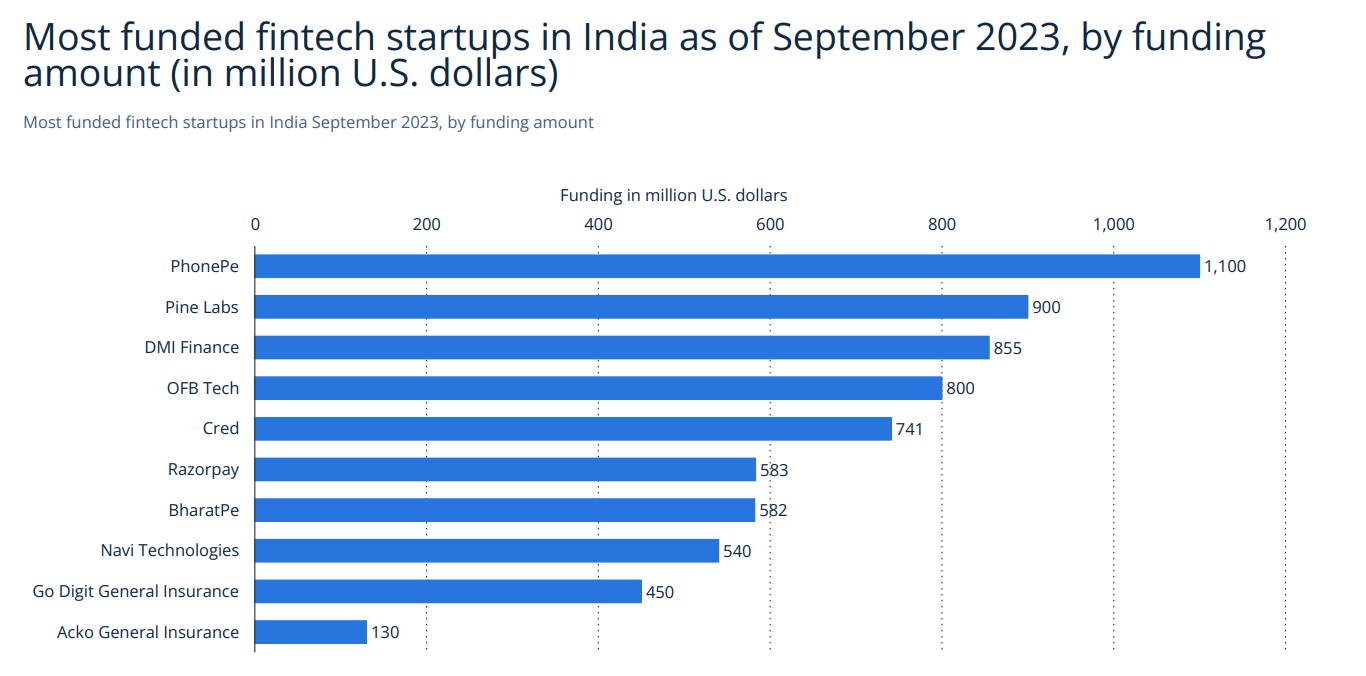
India's FinTech sector has garnered significant investment, with over USD 20 billion in funding over the past five years, which constitutes 21% of total startup funding (PwC, 2024). Foreign direct investment (FDI) and venture capital inflows have significantly contributed to the growth of financial technology solutions, particularly in digital lending and wealth management. The rise of digital lending platforms is helping to close credit gaps, especially for micro, small, and medium enterprises (MSMEs), which have historically faced challenges in accessing formal credit.

Note: Source taken from Fintech News

Fintech firms are also redefining microfinance by providing alternative lending solutions. Companies like Capital Float and CreditMantri leverage digital financial transaction data along with alternative data sources—such as value chain information and social network activity—to assess creditworthiness. This methodology allows for small loans to individuals and small businesses that lack traditional credit histories, thereby fostering entrepreneurship and economic growth.

In addressing gender disparities in financial access, fintech companies are developing products specifically designed for women. By offering user-friendly digital platforms, these firms empower women to manage their finances independently. The Reserve Bank of India's Financial Inclusion Index reflects this progress, increasing from 43.4 in 2017 to 56.4 in 2022, largely due to improved financial access for women (Asian Development Bank, 2023).

The Reserve Bank of India (RBI) has been proactive in creating a supportive environment for fintech growth. The Payments Vision 2025 document emphasises the '5 Is'—Integrity, Inclusion, Innovation, Institutionalisation, and Internationalisation—as foundational pillars for advancing payment systems. This strategic focus aims to enhance the reach and efficiency of digital payments, thereby promoting financial inclusion.

Access to credit is a crucial driver of economic growth, particularly for India's MSME sector, which contributes nearly 30% of the country's GDP. However, only 10% of small businesses have access to formal credit, highlighting ongoing challenges in financial inclusion (India-Fintech-Report, 2020).

Despite significant advancements, challenges remain. Ensuring data security, enhancing digital literacy, and extending infrastructure to rural areas are critical areas needing attention. Collaborative efforts between fintech companies, regulatory bodies, and traditional financial institutions are essential to overcome these challenges and maintain momentum toward comprehensive financial inclusion.

To tackle these issues, digital lending platforms are utilising artificial intelligence and machine learning to evaluate creditworthiness using criteria beyond traditional banking parameters. Alternatives such as supply chain financing, peer-to-peer lending, and embedded finance are gaining popularity as funding mechanisms (Investing in India’s FinTech Disruption, 2024)

In summary, fintech's innovative approaches are transforming India's financial landscape, making it more inclusive and accessible. With continuous innovation and supportive regulatory frameworks, fintech is well-positioned to play a central role in achieving the nation’s financial inclusion objectives.


Jobs, Growth, and the Young Nation: A New Fiscal Vision for India

     India is experiencing a potential economic boom due to its demographic transition, which will result in a large proportion of the working-age population compared to the non-working population. India's median age is expected to be around 28 to 29 years between 2025 and 2030, making it one of the youngest countries in terms of demographic structure. Simon, in his influential book ‘The Ultimate Resource (1981)’, showed that rapid population growth can lead to positive impacts on economic development (Simon, 1981). However, to realise the perceived benefits, the correct policies and environment must be put in place(Bloom et al., 2003). Despite having a young population, India struggles to generate employment. The high youth unemployment rate is a significant concern, averaging about 6-7% in 2019-2020. India requires investment, skill development, and job creation to harness its large youth population for significant GDP growth(S. Bhalotra et al.,2010). 


India must develop economic and social infrastructure to leverage its demographic dividend. Universal education is essential for creating a skilled workforce, enabling the country to realise this potential(Dreze et al.,2013). The National Skill Development Corporation (NSDC) predicted that by 2025, India would require an additional 109.73 million human resources across 24 critical industries. This emphasises the importance of skill development activities to capitalise on the demographic dividend. Thus, suitable vocational training and skill development programs that are suited to industrial demands are to be imparted to the youth( Agrawal, 2012). Emphasising the importance of investing in health, reproductive, maternal, and child health secures a productive and capable workforce(Bloom et al., 2010).


In India, women's labour force participation has been historically lower than men's due to gender barriers. Eliminating these obstacles could yield significant economic gains( Das Gupta et al., 2003). Different Indian states have undergone various stages of demographic transformation. Southern states like Kerala and Tamil Nadu have younger populations compared to northern states such as Uttar Pradesh and Bihar. Addressing regional imbalances is crucial since demographic profiles can impact policies(Rajan et al., 2013). Emphasis should be on governance, policy, and institutional reforms. To unlock the demographic dividend, promote labour laws, ease of doing business, and entrepreneurship(Ahuja et al., 2006). 


With forecasting the fleeting nature of the demographic dividend, elder care and social security planning measures have to be undertaken with priority(Narayana,2011). Interstate migration plays a key role in India's structural transformation and economic development. People from less developed states like Bihar, Jharkhand, and Uttar Pradesh move to states like Kerala, Punjab, and Maharashtra in search of better employment and earning opportunities(Parida et al., 2020; Parida,2019). 


Public spending on key sectors as a percentage of GDP shows significant deficiencies. In 2021-22, health spending was 1.84%, and education was only 2.7% in 2023-24, both falling short compared to developed countries. Infrastructure spending was allocated at 3.4%, while social security accounted for 7.8% of GDP. Overall, these levels of public spending are inadequate to address the challenges in education, health, skill development, and infrastructure in India.


Public spending on education, health, and infrastructure is essential for leveraging India's demographic dividend for economic growth. As of March 2023, public debt stood at ₹138.2 lakh crore, or 51.3% of GDP, with 95.2% in domestic currency, indicating low currency risk. Most external debt is from official sources, minimizing market volatility. The majority of debt has fixed interest rates, with only 1.7% floating, ensuring stable interest payments. The weighted average residual maturity of dated securities was 11.9 years, with 29.1% maturing in up to 5 years, reducing medium-term rollover risk(MINISTRY OF FINANCE et al., 2022). 


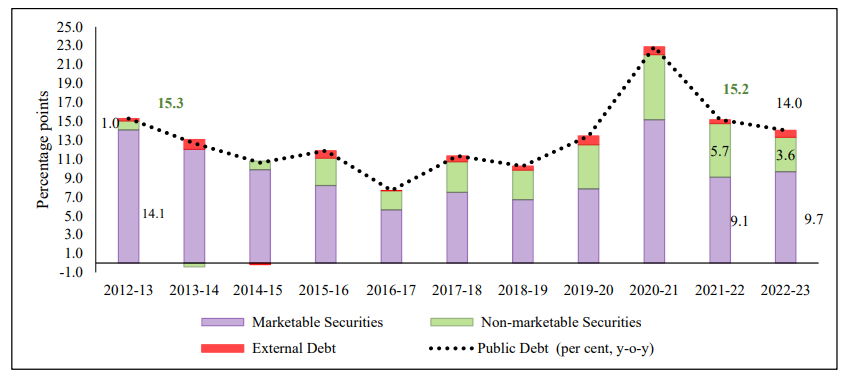
Chart 1: Year-on-Year growth in public debt

(Source: Status Paper on Government Debt for 2022-23 in India)


Debt management operations extend maturities and reduce risk. Commercial banks reduced their share of debt from 40.3% in March 2019 to 36.6% in March 2023, while insurance companies and provident funds hold 26.0% and 4.7%, respectively. The Government's Debt Management Strategy (DMS) assesses the debt profile, indicating low risk. (MINISTRY OF FINANCE et al., 2022).


The budgeted allocation for capital expenditure stands at a mere 3.4% of GDP(2024-25), which is significantly insufficient. Besides, Y-o-Y public debt growth is more or less the same except for the pandemic year(Chart 1).  This situation necessitates increased public borrowing to adequately fund education, health, and infrastructure needs. Many authors argue that higher debt levels can promote greater growth or welfare if the funds are invested in development projects. (Ghosh, 1998; Greiner and Fincke, 2015).


The Government of India's debt management strategies allow for higher public debt, enabling investments in social and physical infrastructure to leverage demographic potential. Publicly funded infrastructure projects are more transparent and accountable, and government debt is generally cheaper than private debt, making it a cost-effective financing option.(Chong et al., 2013). Caution is needed as higher public borrowing may lead to inflation or crowding out in markets, given India's statutory debt and fiscal deficit limits.


Self-employment programs and vocational education are vital for job creation, especially for harnessing India's youthful workforce in Micro, Small & Medium Enterprises (MSMEs). Immediate agricultural reforms are essential to reduce food prices and facilitate labour shifts to industrial and service sectors. Through global remittances, India benefits significantly by reducing poverty and inequality, enhancing savings, investing in human capital, and driving economic growth through increased demand(Parida et al.,2015). To ensure a steady flow of remittances, it's vital to adopt sustainable socio-economic policies and strengthen diplomatic relations for the benefit of individuals and communities.


The Chinese growth story was driven by government initiatives, with local governments innovatively funding infrastructure through financing vehicles, without private or multilateral support. In contrast, India faces high debt and a need for resources for social services, requiring a balanced mix of public and private investment to enhance infrastructure while leveraging its demographic advantages(Chong et al., 2013).


Large infrastructure projects are still associated with the government as they involve huge upfront costs, planning and construction. Besides, investment in infrastructure causes positive externalities arising from network effects(Chong et al., 2013). To address public infrastructure financing challenges, encouraging private sector participation through public-private partnerships (PPPs) is vital. While governments value PPPs for risk management, effective structuring is necessary, and continued public support, such as viability gap funding, is essential to attract private investment(International Monetary Fund (IMF) et al., 2019).


During the 12th Five-Year Plan (2012-2017), government spending on infrastructure was 10% of GDP, with private sector contributions rising to 40%, primarily from bank loans. However, sectoral limits on bank loans restrict further exposure to infrastructure. To enhance private financing, the GOI established the India Infrastructure Finance Company Limited (IIFCL) and an infrastructure debt fund to issue bonds to long-term investors, using the proceeds to refinance bank loans for PPP projects in India, targeting insurance and pension funds for additional financing(International Monetary Fund (IMF) et al., 2019). 


Reform measures are essential for sustainable PPPs in infrastructure. Over 50% of projects face delays due to regulatory hurdles, land acquisition issues, environmental clearances, and sector-specific bottlenecks, leading to cost overruns and project viability concerns. The risk-return profile of these projects affects private investment and government policy decisions. Additionally, the government could leverage a strong capital market and resources from Multilateral Development Banks to meet infrastructure funding needs (Chong et al., 2013). To attract private investments in infrastructure, the GOI should enhance service delivery, create accessible land banks, ease regulations, ensure transparency, improve dispute resolution, and offer viability gap funding. These measures will boost investor confidence and reduce project risks.


By strategically incurring public debt for infrastructure and employment, India can unlock its demographic dividend, creating a virtuous cycle of growth, job creation, and private investment. 


Seeding Tomorrow's Tax Base: The Formalisation Argument the Finance Commission Hasn't Made Yet

Direct tax collection in India is heavily concentrated: a small number of states account for a large share of receipts, while many others co...