Saturday, June 28, 2025

Taxation and Mobility: A Cross-Time Analysis of India’s Experience

Taxation and Mobility: A Cross-Time Analysis of India’s Experience

This article explores tax-related migration from ancient India to modern time. Tax migration refers to the effects of taxation on the geographic mobility of people. There is a rich history in ancient India of kings providing tax exemptions to encourage  highly skilled artisans, poets, astrologers, and scholars to migrate and settle to promote learning, elevate cultural and religious life, and improve societal well-being in their country. Tax-free agraharas were granted to Brahmins to settle and teach in new regions, as recorded in Chola copperplate inscriptions. The Arthashastra recommends land and tax holidays to attract skilled migrants and develop frontier areas. Buddhist Sanghas were gifted entire villages free from state levies to support monastic life. Even the legend of Agastya’s southern migration reflects such royal patronage through land grants and privileges. Thus, the tax exemptions acted as a key element to encourage migration and settlement since ancient times. Does this phenomenon continue even today? Let us examine.

The research establishes the fact that tax-related migration is very common among distinguished personalities who are in the fields of invention, sports, and acting even today. What fuels this trend? Of course, there could be mutual benefits for both state and tax-migrants. It is reported that actor Akshay Kumar has obtained Non-Resident Indian (NRI) status primarily for tax purposes, allowing his global professional income to remain outside the Indian tax net. This strategy is not uncommon among high-profile individuals—such as celebrities, sportspersons, and tech entrepreneurs—who often earn substantial cross-border incomes. Among various motivations, one key reason individuals opt for Non-Resident or Non-Domiciled (Non-Dom) status is to minimize their tax burden by relocating their tax residency to countries that offer low or zero personal income tax regimes.(NRI - refers to persons who stayed abroad for more than 182 days in a year)

Further, studies found that the High-Net-Worth- Individuals(HNWI) are highly -elastic to the tax rates and readily mobile to change their resident status to save them from paying large taxes. India has increasingly witnessed this trend. Migrating the wealth to offshore havens in response to high-tax-rates is a long- existing trend. As we see several tax havens offer mechanisms to conceal wealth in their countries in the form of equities, real assets, financial instruments etc. (HNWI- refers to persons who have ₹5 crore and above in investible assets as per SEBI)

The HSBC, Panama, Paradise, Pandora, and Dubai leaks together show a clear pattern of Indians hiding wealth offshore. The HSBC Swiss leaks (2015) alone revealed over 1,000 Indian account holders with undeclared assets worth more than $4.1 billion. The Panama Papers (2016) and Paradise Papers (2017) exposed secret offshore companies linked to politicians, actors, and business groups. However, there is a worrying trend of exodus of HNWI to foreign destinations. What exactly inspires this trend?

The trend analysis reveals that from 2011 to 2019, the number of people renouncing Indian citizenship remained relatively stable, ranging between 1,20,000 and 1,45,000 annually. A sharp dip occurred in 2020, with the number falling to around 85,000—likely due to COVID-19-related travel restrictions and global uncertainty. This was followed by a dramatic rise, 2021: 1,60,000, 2022: Peak at 2,25,000 (highest in the period), 2023: Slight decline to 2,15,000, but still historically high. As per the Ministry of External Affairs(MEA), reasons for renouncing citizenship  are personal. Also, MEA acknowledges the potential of the global workplace in an era of a knowledge economy.

Trends in the Indians who renounced citizenship:
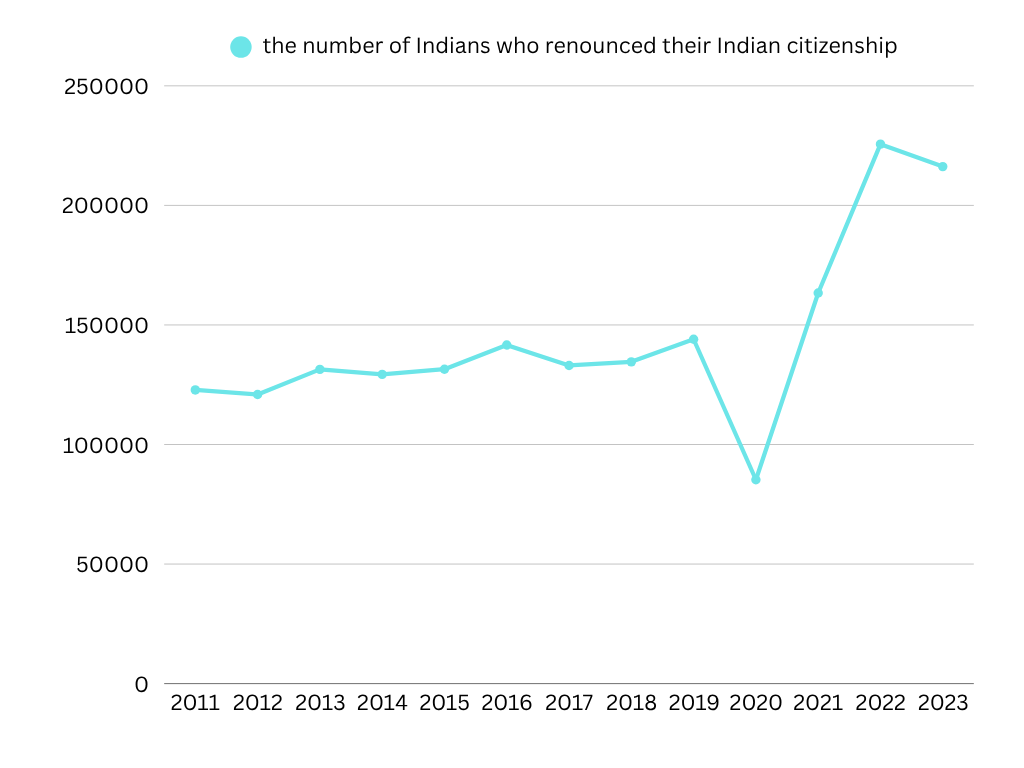


There could be several pull factors and push factors to this structural shift in rise in number. The push factors could be deteriorating quality of life, lack of job opportunities, lack of recognition of talent, high taxation rates( both direct and indirect). The pull factors include zero or low tax rates, better job-cum-remuneration, quality of life, career prospects, better social security etc. However, we lack data to ascertain what exactly drove them to renounce Indian citizenship. 


Despite the lack of direct evidence, the countries wherein these people took citizenship offers some insights about the motives. USA, Canada, and Australia accounting for the choices of more than 75% of the renounced. These patterns underscore that Indian emigrants prioritize countries with transparent immigration systems, better social infrastructure, stronger passports, and favorable work or business conditions. The dominance of the U.S. also reflects the continued demand for high-skilled Indian workers, especially in tech and healthcare sectors. 


Top destination countries for renounced from India:
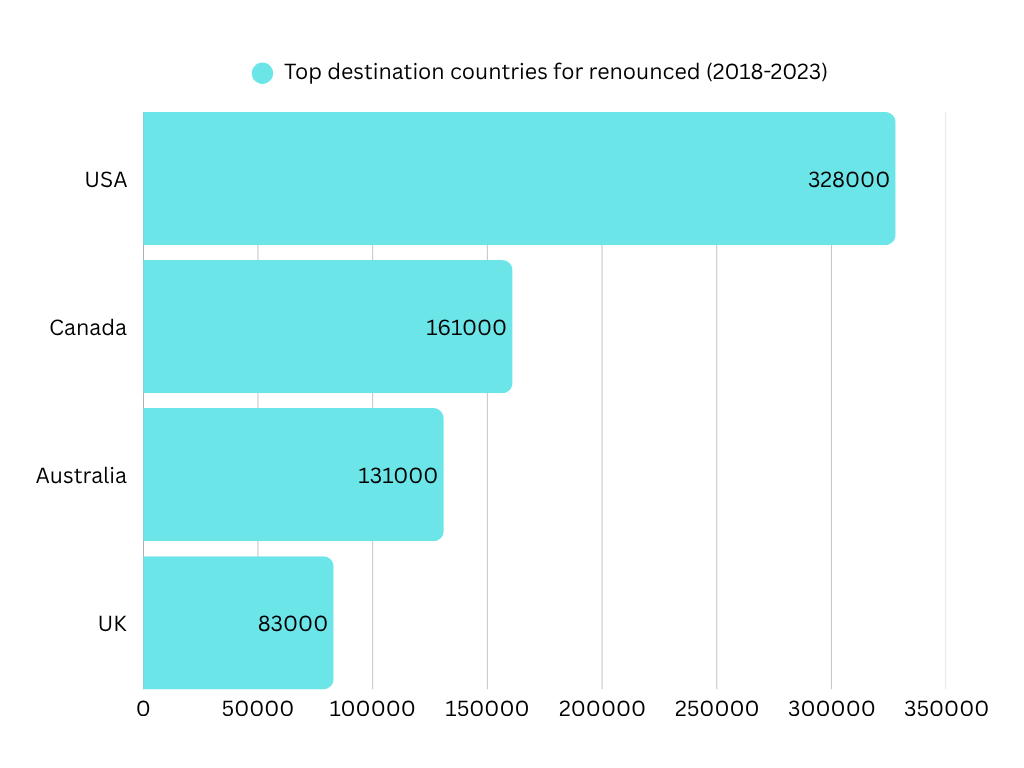


From the above analysis, safely, we can conclude that this trend of renouncements  to anglophonic countries as “career oriented mobility” rather than tax-based-migration, as these countries do not offer any preferential taxation regime for immigrants and also tax rates are relatively high. 


On the other hand, there was a persistent trend of exodus of HNWI in the recent past. As per the Henley & Partners Private Wealth Migration Reports (2022–2025), India is one of the top countries where exodus of HNWI persists. The figure below captures the trend of HNWI exodus from 2021 to 2025(projected). The report points to the fact that most of the HNWI emigration happens to UAE. Although the trend is not so alarming, it reveals the socio-economic preferences of the HNWI in choosing UAE, US and Singapore. Taxation is one of the major reasons driving this trend. The major reasons include UAE offers Zero personal income tax and other favourable disclosure norms. On the contrary, India tightened the disclosure norms on the global incomes of the tax residents with the Black Money Act etc. 


Trends in exodus of High Net Worth Individuals from India:
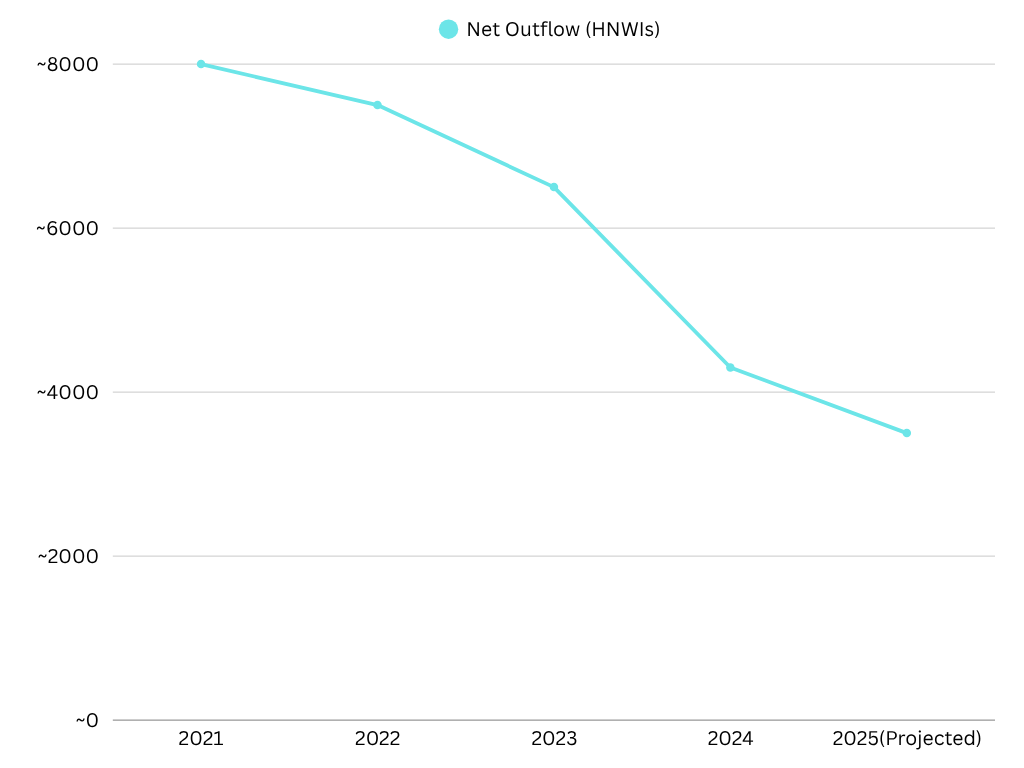


According to Henley & Partners, India continues to lose large numbers of millionaires, especially to the UAE. However, in our view these outflows are not particularly concerning as India continues to produce far more new HNWIs than it loses to emigration. Furthermore, the bulk of the millionaires who leave India tend to retain business interests and second homes in the country, which is a positive sign. Though re-assuring, we cannot be complacent with the trend. Exodus of HNWI means not only loss of tax revenue, also, impact on growth of private jobs, innovation, investor confidence, business sentiment etc. India must take necessary steps to reverse this trend at the earliest. 


Comparative chart of tax rates of relevant countries:


Country

Top Personal Income Tax Rate

Capital Gains Tax

Inheritance Tax

Remarks

India

30% + surcharge (up to ~43%)

10–20% depending on asset & period

None

High effective tax rate for HNWIs; no inheritance tax; compliance tightening in recent years.

UAE

0%

0%

0%

Tax haven; no personal income tax or capital taxes; popular among HNWIs for asset protection.

USA

37% (federal) + state taxes

Up to 20% + possible state taxes

Yes

High total tax burden; offers business and lifestyle opportunities; estate taxes significant.

Canada

33% (federal) + provincial

50% of capital gain is taxable

None (but probate fees)

Progressive system; high rates at upper incomes; strong public services attract emigrants.

Australia

45%

Taxed as income; 50% discount after 1 year

None

High income tax; CGT can be optimized; no inheritance tax; strong social benefits.

UK

45%

10–20% based on income & asset type

Yes (40% above threshold)

High taxes; inheritance tax burdened; Non-Dom regime historically favored wealthy foreigners.

Singapore

22%

No capital gains tax

No

Low-tax hub; no CGT or estate tax; efficient compliance; very HNWI-friendly environment.


In ancient India, kings attracted talent across disciplines by offering land grants and tax-exempt revenue villages, thereby enriching societal and economic life. Drawing inspiration from this historical approach, modern India must focus on rationalizing its tax regime and simplifying compliance to retain high-net-worth individuals. Providing targeted incentives for returning NRIs and fostering investor confidence are equally important. At the same time, enforcement against offshore tax evasion should be balanced with the need to support global mobility. Broader reforms aimed at improving ease of living and doing business will be essential for sustaining long-term economic retention.

Retaining talent today requires the wisdom of ancient incentives with the agility of modern reform


Tuesday, June 24, 2025

Behavioural Nudges in Tax Compliance


India's tax compliance remains notably low, with a tax-to-GDP ratio below 12%, significantly trailing behind OECD nations. In the realm of Direct Taxation, this ratio hovers around 5%, which is insufficient and inadequate. The accompanying chart illustrates the disparity between the Direct tax-to-GDP rate and the GDP Growth rate, highlighting the widening gap between the two. This suggests that a substantial portion of the population is outside the tax net and not contributing to the nation despite the evident economic growth. 
Figure: 1 Direct tax to GDP rate Vs GDP Growth Rate  Figure: 2 Year-wise Number of Filers  and Percentage Change

The relationship between economic growth and tax collection is mutually reinforcing. Over the past 30 years, India has experienced consistent and organic growth in its gross domestic product. However, direct tax collection does not accurately reflect this GDP growth. The tax-to-GDP growth rate has remained largely flat, indicating a lack of buoyancy in collection over the years. While many attribute this lack of buoyancy to skewed income distribution, it is evident that the country must also tackle compliance gaps.

The World Bank suggests that an ideal tax-to-GDP ratio is approximately 15%. This ratio plays a crucial role in fostering economic growth and development, facilitating a country's transition from low-income to middle-income status. It enhances the government's capacity to invest in essential public services such as education and healthcare. Additionally, a robust tax-to-GDP ratio helps mitigate economic volatility and address income inequality, allowing countries to avoid reliance on borrowed funds for development initiatives(Taxing for Growth: Revisiting the 15 Percent Threshold, 2024). 

India has significantly under-invested in critical areas like health, education, skill training, and infrastructure. This raises serious doubts about the State’s ability to generate resources through effective taxation. India still has 30% of its people living in poverty. 

Figure: 3 India’s Public Investment in Key Nation-Building Sectors(% of GDP)

It is inevitable for the country to mop up the resources through the right taxation of the right people. Traditional enforcement models, which rely on search and seizure operations (often referred to as raids), audits, and hefty penalties, fail to address the behavioral factors that drive tax compliance. There is a pressing need to integrate behavioral insights into tax administration to enhance voluntary compliance, reduce evasion, and improve revenue collection.

b. The intervention and its theoretical basis

Various psychological factors contribute to the challenges of tax compliance among individuals. A primary issue is the complexity of tax laws, which can discourage taxpayers and reduce their willingness to comply. Individuals often assess their knowledge of tax regulations, impacting their compliance intentions. Additionally, misconceptions about taxation frequently lead to non-compliance. Negative attitudes toward taxation, influenced by cultural, social, and personal beliefs, can also lower compliance rates. Social norms—such as the perception that others evade taxes—can further encourage tax evasion.

When individuals perceive the tax system as unfair, whether regarding tax distribution (who pays what), collection procedures, or penalties, they may be more inclined to evade taxes. It is widely acknowledged that the intrinsic desire to pay taxes, or tax morale, varies among individuals and societies. Low tax morale can result in increased evasion. Furthermore, cognitive shortcuts, or heuristics, such as misperceptions of risk and the effect of framing, can influence decisions about tax compliance. For example, if taxpayers mistakenly believe that audits are rare or penalties are lenient, they may engage in riskier behavior.

Finally, the manner in which tax authorities interact with taxpayers plays a crucial role in compliance. An enforcement-oriented approach (e.g., heavy fines, audits) can provoke resistance, while a service-oriented approach (e.g., facilitation, transparency) can foster trust and promote voluntary compliance (Kirchler, 2007).

In light of the above, let us explore the "slippery slope model," which suggests that tax compliance relies on a balance between trust in authorities and the authorities' power to enforce compliance. When trust is low, the use of enforcement measures may backfire, leading to even greater tax evasion.

 The Slippery Slope Framework (SSF) focuses on the relationship between trust in tax authorities and their power. It distinguishes between voluntary compliance, based on trust, and enforced compliance, based on authority. Trust in tax authorities is fostered through transparency, fairness, and effective tax administration. High levels of trust encourage voluntary compliance, with taxpayers willingly paying taxes as a contribution to society. Strong institutions, equitable tax policies, and public confidence in the government are likely to yield higher levels of voluntary compliance.

 Power, on the other hand, refers to the ability of tax authorities to observe, audit, and penalize tax evaders. When power is high, it leads to enforced compliance, where taxpayers comply out of fear of being caught and punished. Relying too heavily on enforcement can create resentment and ultimately undermine voluntary compliance over time. The interaction between power and trust should be mutually reinforcing. Optimal tax compliance is achieved through a balance of both factors. When trust is high, enforcement is minimal, fostering a cooperative environment among taxpayers. Conversely, when trust is low, tax authorities must increase enforcement, creating an adversarial atmosphere that encourages resistance. A slippery slope scenario arises when both trust and power are low, resulting in widespread tax evasion. 

Slippery Slope Framework
Figure 4: Pictorial representation of Slippery Slope Framework, Source: https://www.mdpi.com/

Research shows that trust in tax institutions significantly affects overall tax compliance more than enforcement measures do. While enforced compliance can be effective, it risks damaging long-term trust and voluntary compliance. Therefore, policy approaches should aim to build trust by treating taxpayers fairly while also maintaining an effective enforcement system(Lisi & University of Cassino, 2019). 

Slippery Slope Matrix
Figure 5: Slippery Slope Framework Matrix

c. Details of its implementation

It is evident from the discussion supra that more trust in tax authorities coupled with fair enforcement will yield more compliance. The implementation must combine behavioral insights to increase voluntary tax compliance, transcending the classical enforcement paradigm. Some of the most important behavioral-based recommendations are highlighted below:

1. Social Sanctions & Recognition – Publicizing payment of taxes or rewarding compliant taxpayers affects behavior by social norms. When people notice others paying taxes, they tend to comply themselves. Some countries have implemented "honor lists" for high taxpayers, thus generating positive reinforcement, while others apply mild social sanctions for non-compliance(Dom et al., 2022). In India, regular high-income taxpayers are awarded while middle-income taxpayers are not recognised. All layers of taxpayers must be rewarded, including free-lounge facilities in airports, free insurance coverages, priority access in airports, preferred seat allocation in railways, reduced toll rates, etc. 

2. Trust-Based Compliance – Taxpayers are more compliant when they feel the tax system is equitable, fair, and accountable. Governments must show transparency in tax collection and expenditure to create trust, decrease corruption perceptions and enhance voluntary compliance(Dom et al., 2022). Strengthening anti-corruption institutions, speedy trials in corrupt cases, barring corrupt politicians from contesting elections, breaking the bureaucratic-politico nexus through transparency and increasing accountability through public audits, etc.

3. Simplified Tax Processes – If tax procedures are too complicated, taxpayers are likely to hide taxes because they are confused, or compliance is costly. Simplification of tax reporting processes, making digital platforms available, and the availability of unambiguous tax policy promote compliance through minimizing the compliance effort(Dom et al., 2022). The tax department has continuously taken steps to simplify the tax filing process, including E-filing, compliance through online, simplified tax forms, etc. The recent simplification of provisions in the Income Tax Act is an example. Still, a lot can be done to make it less complex. Simplification of TDS provisions and processes, relief from mandatory tax audits in the thriving sectors such as MSME, renewable energy, prompt refunds, etc.

4. Behaviorally Designed Letters – Research indicates that tailored tax reminders with behavioral nudges, for example, highlighting social norms ("9 out of 10 individuals pay their taxes on time"), applying loss aversion (alerting taxpayers to possible penalties), or making moral appeals, strongly enhance tax compliance(Das Biswas, 2024).  We should make tax filers feel privileged and of a high moral status worthy of publishing to all. 

5. Pre-filled Tax Returns – Compliance rises when the process is simple. Pre-populating tax returns using third-party information minimizes errors, saves time, and enhances taxpayer trust, resulting in greater compliance(Das Biswas, 2024). The use of AI and data analytics could help pre-populate the relevant data for tax filing, where a taxpayer has to just give his consent or otherwise. This requires substantial investment in building infrastructure for the integration of bank transaction details, movable and immovable property details, and other relevant information to get it populated. 

6. Public Goods Communication—Governments can enhance tax morale by connecting tax payments with observable public goods, like infrastructure and healthcare. This reinforces the perception that taxes directly fund citizens' welfare (Dom et al., 2022). Visibility of how tax money is used will have a huge impact on taxpayers' morale. 


Figure 6: Strategic communication to nudge the common people to contribute to building the nation.  
When supplemented by conventional deterrence mechanisms, these behavioural interventions provide a more efficient and trust-based tax system.

d. The final/expected results

Behavioral considerations, such as psychological and social influences, are important for enhancing tax compliance rather than mere enforcement. The Slippery Slope Framework (SSF) postulates that tax compliance is affected by two key variables: trust in tax agencies and perceived enforcement authority. By using behavioral nudges that raise trust levels and tax morale, governments can move compliance from enforcement-based to voluntary, which is more sustainable in the long term.

One crucial method is ensuring transparency and equity in tax administration, as this fosters trust and encourages voluntary compliance. When taxpayers perceive tax policies as fair and believe the government acts responsibly, they are more inclined to comply willingly. Additionally, social norms and peer influence can serve as powerful motivators; research shows that informing individuals about high compliance rates among their peers significantly increases the likelihood of tax payment.

Another effective nudge involves positive reinforcement. Studies suggest that recognising and rewarding cooperative taxpayers—whether through acknowledgment or modest incentives—promotes positive behavior and strengthens tax morale. Conversely, relying solely on deterrent measures such as audits and penalties may yield temporary compliance but can undermine long-term trust and foster a confrontational dynamic of "cops vs. robbers."

By thoughtfully implementing behavioral nudges such as personalized messaging, simplifying tax preparation, and fostering trust, governments can cultivate a synergistic tax environment where high compliance can be achieved even in the absence of strong enforcement. Ultimately, voluntary compliance is far more effective and sustainable in the long run than compelled compliance. Through these initiatives, tax buoyancy will be enhanced, allowing for the necessary resources to support the development sector and other areas.

e. Examples from China

A Chinese field experiment tested deterrence and non-deterrence nudges to tax compliance by reminding 7,377 taxpayers. Deterrence nudges, such as credit penalties and fines for late payment, boosted compliance by more than 6%, whereas non-deterrence nudges, such as appeals to tax morale, had no influence. The effect was transitory—credit fines affected behavior for up to six months, whereas other deterrence nudges decayed more quickly. Private-sector employees, high-income earners, and men were more responsive, while government employees, entrepreneurs, and the super-wealthy displayed minimal change(Yang et al., 2024).

The research highlights that while simple nudges are beneficial, achieving lasting compliance requires both effective enforcement measures and the fostering of trust within the community. These elements are crucial for fostering positive and sustainable behaviours.


Navigating BEPS and Global Tax Reforms: Implications for India’s Financial Market

Introduction

Base Erosion and Profit Shifting (BEPS) and other international tax issues have a significant impact on India's financial market. The problems primarily arise due to profit-shifting arrangements by multinational corporations (MNCs), tax havens, and aggressive tax competition among nations. Being a developing country, India is facing a colossal revenue loss due to tax avoidance strategies followed by business groups and high-net-worth individuals. This essay presents the implications of BEPS and other international tax issues on India's financial market and suggests regulatory controls to meet such challenges.

Understanding the Issue

Global tax governance has been influenced by institutions like the Organisation for Economic Co-operation and Development (OECD) and its BEPS strategy mainly. The BEPS initiative is geared towards curbing tax avoidance by multinational enterprises using strategies like country-by-country reporting, the Common Reporting Standard (CRS), and the imposition of Pillar One and Pillar Two reforms. The strategies have been criticized as being developed-bias, with developing economies like India left behind.

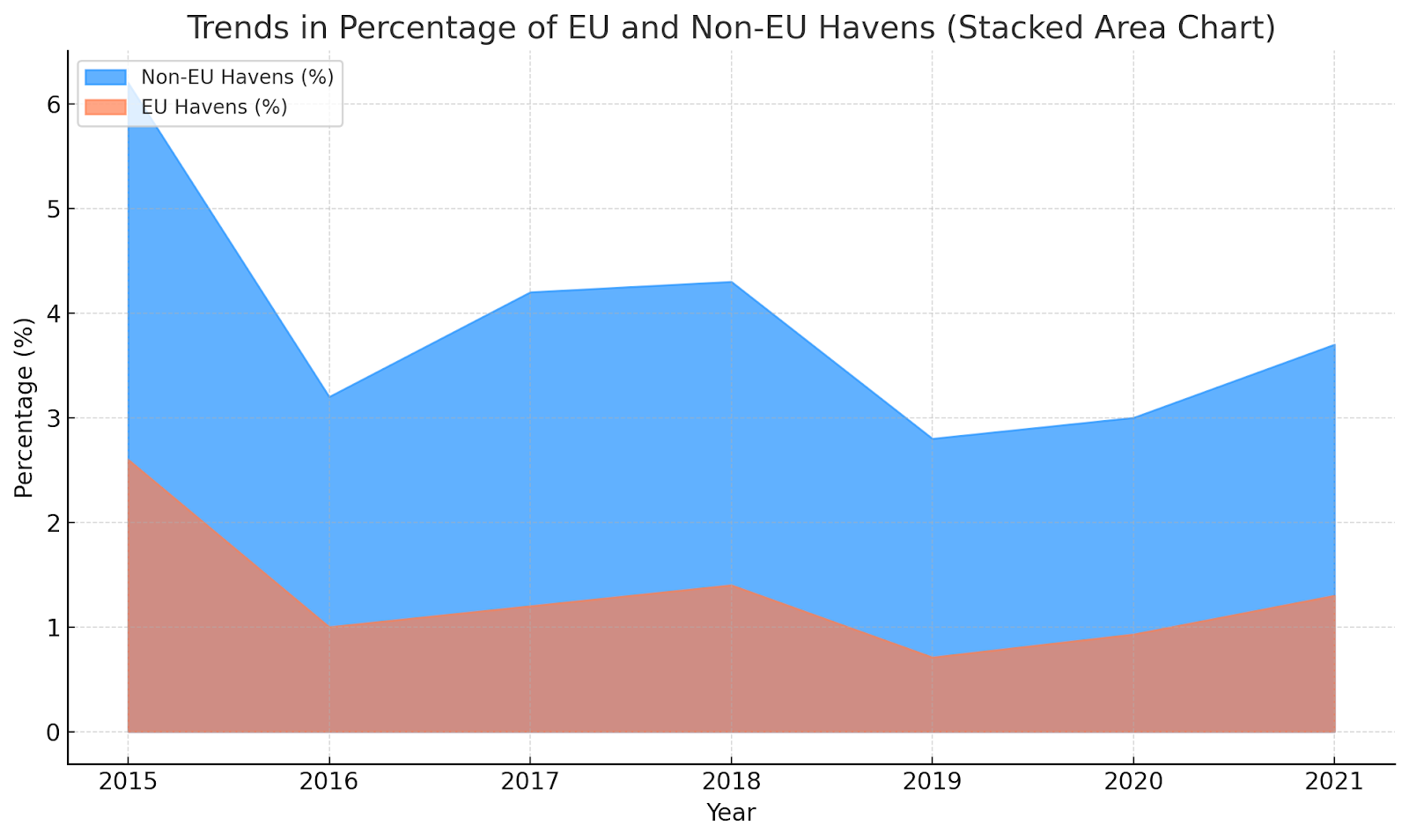
India is losing substantial tax revenues as a result of profit shifting and tax competition. Reports state that corporate tax collections lost by India as a result of BEPS in 2021 totalled about 2% of total corporate tax collections. The absence of a strong global tax framework makes it easy for MNCs to take advantage of loopholes, diverting profits to low-tax destinations and eroding India's tax base.

Figure 1:Trends in  Corporate tax revenue lost as a share of corporate tax revenue collected (in %) and the amount of tax revenue lost in India due to profit shifting.


Note: Graphs show the trends in Corporate tax revenue lost as a share of corporate tax revenue collected (in %) and the amount of tax revenue lost in India due to profit shifting. Source: The Atlas of the Offshore World, n.d.-b


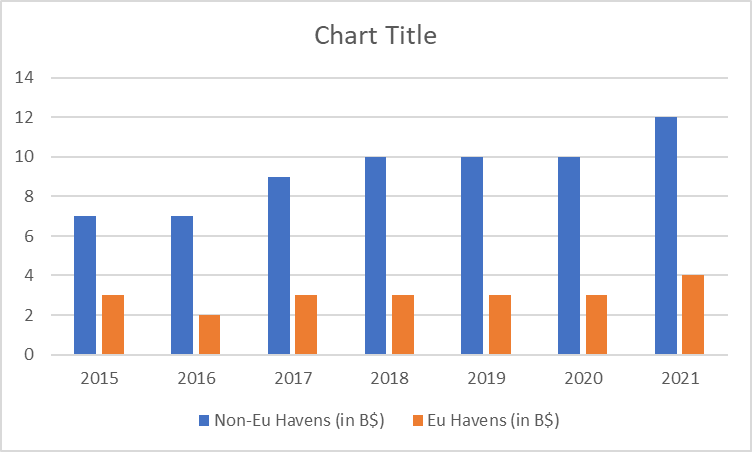
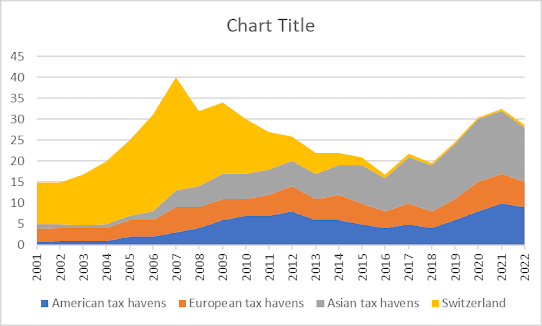
Figure 2: Trends in the cumulative amount of offshore financial wealth (equities, bonds, mutual fund shares, and associated bank deposits) held abroad by Indian households


Note: The figure shows the cumulative amount of offshore financial wealth (equities, bonds, mutual fund shares, and associated bank deposits) held abroad by Indian households. The above graph breaks down this wealth by the location of the tax haven it is held in. ( in Billion $ terms). Source: The Atlas of the Offshore World, n.d.-b


Effects on the Financial Market of India

  1. Erosion of Public Revenue: Redistribution of profits to tax havens deprives governments of corporate tax revenues, which decreases the government's revenue. Decreased revenue constrains public investment in infrastructure, healthcare, and education, hence undermining economic growth and financial stability.

  2. Foreign Direct Investment (FDI) Volatility: Though tax incentives are utilized for the attraction of foreign investment, harsh tax competition could lead to an unstable business atmosphere. India's reductions in its corporate tax rate to remain competitive have led to short-term peaks in investment but cannot guarantee economic sustainability in the long term.

  3. Stock Market and Investor Confidence: The stock market responds negatively to uncertainty caused by taxes. Offshore tax leaks such as the Panama Papers and Pandora Papers have exposed the magnitude of tax evasion by Indian parties, which has eroded investor confidence. Transparency and poor regulation reduce confidence in Indian financial institutions.


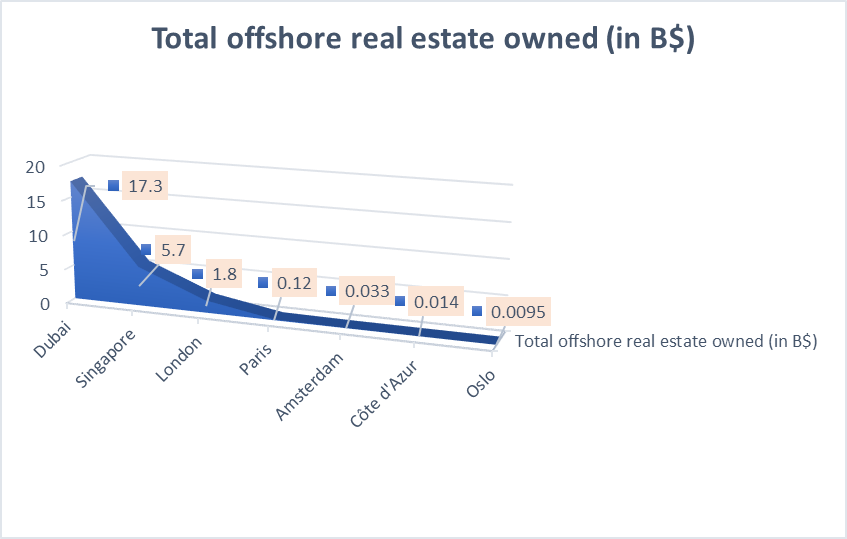
  1. Offshore Real Estate Investment Grows: BEPS also affects capital investment as rich people and companies invest money in offshore real estate hubs such as Dubai, bypassing local investment options. This undermines the Indian banking sector by lowering local savings and capital for lending.


Figure 3: Offshore Real Estate Wealth in 6 Global Cities and Regions by Indians


Note: Graph shows Offshore real estate wealth in 6 global cities and regions by Indians. Total Offshore real estate wealth is 24.93 bn USD and it is 0.87% of the Country’s GDP.  Source: The Atlas of the Offshore World, n.d.-b


Addressing BEPS and Tax Challenges

To tackle BEPS and related tax issues, India needs a multi-pronged regulatory approach, combining domestic reforms with active participation in global tax governance.

1. Enforcement of Domestic Tax Laws: India has gone on to tackle BEPS via, among others, the General Anti-Avoidance Rule (GAAR) and the reform of the Income Tax Act. There is still, however, a need to consolidate tax enforcement. 

Compulsory public country-by-country reporting: Requiring MNCs to disclose detailed financial information on their operations in all countries can hold them more accountable and transparent.

Strengthening Transfer Pricing Regulations: India will have to enhance its regulation on intra-group transactions to prevent profit shifting in the form of high royalty payments and management fees.

2. Enhancing International Cooperation: The current OECD-led framework has been criticized for favoring developed nations, necessitating a more inclusive approach.

Support for a UN-Led Global Tax Policy Framework: India has supported a UN-led global tax policy framework to help ensure equitable representation of developing nations in world tax policy development.

Strengthening Automatic Exchange of Information (AEOI) and Common Reporting Standard (CRS): Better tools to enforce more effective monitoring of undeclared offshore assets can discourage tax evasion.

3. Fighting Tax Havens and Offshore Wealth

India must implement tougher policies to discourage tax evasion through offshore deposits and property investment.

Extensive Offshore Asset Disclosure Mechanisms: The government should intensify surveillance of Indian investments in tax havens and impose a penalty for nondisclosure.

Prioritizing Beneficial Ownership Transparency: Mandatory disclosure of ultimate ownership arrangements in offshore accounts will stop illicit financial flows.

4. Execution of Digital Taxation Policies

With the digital economy growing rapidly, India must adapt its tax policies to ensure fair revenue collection from multinational digital enterprises.

Strengthening Equalization Levy: Expanding the base of the equalization levy on digital services will allow India to tax revenue from digital entities without a physical presence in India.

Implementing OECD's Pillar One with Modifications: Although OECD's Pillar One aims to redistribute taxing rights, India needs to negotiate terms more suitable for developing countries.

Conclusion

The BEPS and tax competition challenges undermine India's financial stability, lowering tax revenues, deterring domestic investment, and boosting offshore financial flows. OECD-led frameworks have progressed but not to the extent of addressing the concerns of developing countries. A UN-led tax governance model can provide a more balanced solution by providing equitable representation in global tax policymaking.

India should take a balanced approach to fortifying its domestic tax policy, encouraging openness, improving taxation in the digital era, and pursuing inclusive international cooperation. Adopting these methods will enable India to protect its financial market as well as earn sustainable economic progress while mitigating the negative implications of BEPS and global tax concerns.


Seeding Tomorrow's Tax Base: The Formalisation Argument the Finance Commission Hasn't Made Yet

Direct tax collection in India is heavily concentrated: a small number of states account for a large share of receipts, while many others co...